

At first, the feeling is surprisingly harmless. It’s a light tingling in the fingers that comes and goes quickly, leaving people unsure if anything bad has happened. That little problem starts happening more often over time, which means something bigger is going on.
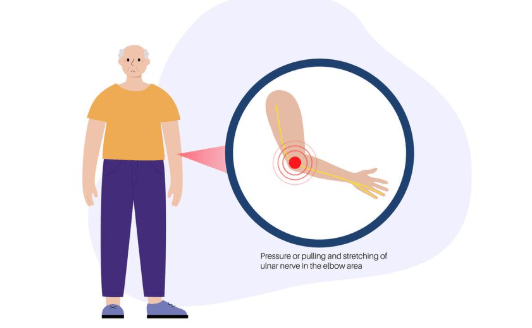
Cubital tunnel syndrome happens when the ulnar nerve gets pinched near the elbow. This stops signals that normally travel very quickly and reliably between the brain and hand. The nerve that controls accuracy and feeling starts to have trouble doing its job.
Cubital Tunnel Syndrome Surgery Key Facts
| Category | Details |
|---|---|
| Condition | Cubital Tunnel Syndrome |
| Affected Nerve | Ulnar nerve at the elbow |
| Purpose of Surgery | Relieve pressure and restore nerve function |
| Procedure Duration | About 30 to 45 minutes |
| Surgical Methods | Decompression, nerve transposition, or bone adjustment |
| Hospital Stay | Same-day outpatient procedure |
| Initial Recovery | Light activity in 2 to 3 weeks |
| Full Recovery | Around 2 to 3 months |
| Rehabilitation | Physical therapy and range of motion exercises |
| Main Benefit | Reduced numbness and improved hand strength |
In the last ten years, doctors have seen more patients notice these symptoms sooner, which has helped stop permanent nerve damage. If you know about a problem early on, you can start treatment sooner, which greatly lowers the risk of long-term problems.
The nerve itself acts a lot like a communication cable, sending electrical signals quickly, like a swarm of bees moving messages between flowers and coordinating activity that seems to go on without a hitch until something gets in the way. Surgery works very well when compression gets really bad.
Surgeons fix the nerve by making more space around it. They do this by either releasing tissue around it or moving the nerve to a new location to keep it from getting too much pressure in the future. Even though this procedure only takes a short time, it is a big turning point.
The recovery period starts off slowly and requires patience and attention. This is so that the nerve can heal in an environment where pressure has been greatly reduced. This phase is very helpful for long-term recovery, even though it is limiting.
Physical therapy is a very flexible part of this process. It helps patients do exercises that will help them get their coordination and mobility back. These movements may seem simple, but they are very good at helping people feel better about themselves. One patient said that after weeks of weakness, holding a pen again felt very important to them.
Surgeons use different methods based on how bad the compression is. Decompression alone is sometimes enough, but in other cases, moving the nerve to a different spot stops further irritation. These methods have made surgery results much better.
The time it takes for patients to recover varies, but most can start doing light activities again within weeks. This is a lot faster than older surgical methods. New methods have made the procedure very quick and more reliable.
For a lot of patients, the emotional effects of recovery are just as important as the physical ones. Being able to trust their hand again gives them back their independence, which had been slowly slipping away.
The surgery itself shows a very new way of understanding how nerves work, which lets doctors fix structural problems without damaging nearby tissue more than necessary. This level of accuracy helps the healing process go more smoothly.
Since advanced surgical methods became available, the number of complications has gone down a lot. This gives patients peace of mind who might otherwise be hesitant. People’s faith in the procedure has grown steadily.
Once the nerve is compressed, it slowly starts to work again, restoring communication that had been lost. This process shows how amazing the body is at healing itself when the right conditions are present.
These steps may seem small, but they have a big effect that lasts a long time. They build muscle and help you get your coordination back. A surgeon said that the nerve was “rediscovering its pathway,” and that phrase stuck with me long after we talked.
In the next few years, new surgical techniques are expected to make procedures even faster and more accurate, which will lead to even better results. These new ideas show that we are still dedicated to helping patients get better.
For people who have cubital tunnel syndrome, surgery offers something very simple but very important.
