

Usually, it begins with nothing. Not a warning. The artery supplying your heart is narrowing quietly, like someone gradually pinching a garden hose. Until it becomes urgent, ischemic heart disease rarely raises its voice, and by then, the body is already catching up.
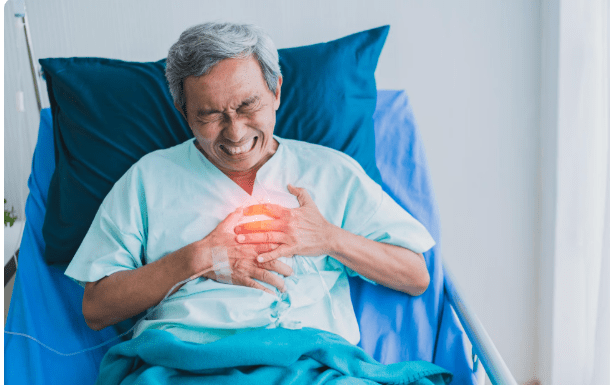
Each person experiences angina differently. Some people think it's heartburn or a sore chest after a long day, while others describe a tightness that feels like an invisible vice. The odd thing is that people tend to ignore these symptoms, dismissing them as stress or indigestion. Particularly when they disappear as swiftly as they appeared.
| Key Detail | Description |
|---|---|
| Condition | Ischaemic Heart Disease (IHD) reduces blood supply to the heart muscle due to narrowed arteries. |
| Main Cause | Plaque buildup (atherosclerosis) leading to restricted oxygen and blood flow. |
| Typical Symptoms | Chest pain (angina), fatigue, shortness of breath, dizziness, or silent ischemia. |
| Risk Factors | Smoking, diabetes, high blood pressure, obesity, poor diet, and lack of physical activity. |
| Early Onset | May begin silently as early as one’s 30s, progressively worsening over decades. |
| Common Treatments | Lifestyle changes, medications (statins, aspirin), stenting, or bypass surgery. |
| Long-Term Outlook | Manageable with early intervention and lifestyle shifts; serious if left untreated. |
The fact that the symptoms are frequently completely silent is especially concerning. It is possible to have silent ischemia, particularly in diabetics. IHD is a particularly dangerous condition because the body becomes silent while gradually losing oxygen-rich blood. You can feel perfectly well even though your arteries are compromised.
Cardiologists have observed over the last 20 years that IHD is not always a condition that waits for old age. It starts slowly, usually in the thirties, and accumulates plaque in arteries layer after layer. The blood's path to the heart is shortened by this accumulation. Although the risk gradually increases, the early stages might not decrease flow enough to produce symptoms.
The damage has typically progressed past a threshold by the time someone starts to experience dyspnea after walking up a slope they used to be able to handle with ease. At that point, stable angina—chest pain brought on by exertion and alleviated by rest—occurs. Under pressure, your heart is negotiating oxygen levels.
Occasionally, however, the negotiation fails. Unexpected ruptures of plaque can cause the body to rush to contain the injury and form a clot. An artery can be completely blocked by that clot. At that moment, tissue starts to die and blood flow stops. We refer to this as a heart attack.
The pain becomes unbearable during such instances. A pressing weight, like someone sitting on your chest, in addition to discomfort. The pain frequently radiates into the jaw, back, and left arm. People who aren't sure if it's serious have tried to brush it off. I've also seen people who were never given the opportunity to make a choice.
Years ago, in a quiet hospital waiting room, I overheard an elderly woman who was obviously shaken by her husband's heart attack telling me that he had been exhausted for weeks. She uttered, almost in a whisper, “He simply didn't want to disturb anyone.” That line stayed with me. Heart disease strikes without warning.
Even though the illness can worsen, it responds remarkably well to early intervention. Many patients have drastically decreased their long-term risk by giving up smoking, eating a more balanced diet, and engaging in regular exercise. Despite their apparent simplicity, these actions have the potential to change lives.
The field of medicine has also made significant progress. Aspirin thins the blood just enough to lower the risk of a clot, beta-blockers lessen the workload on the heart, and statins help lower cholesterol levels. When combined with lifestyle changes, they create a protective strategy that is especially advantageous.
When required, procedures like angioplasty, which involves inserting a stent after a tiny balloon widens the constricted artery, can restore blood flow remarkably quickly. Bypass surgery is still a very good option for more complicated cases because it opens up new channels for blood to flow to the heart.
Many people view these procedures as a second chance. a restart. However, the real effect is frequently observed months later when the patient observes that everyday fatigue has decreased after they have started walking more frequently and eating more mindfully. At that point, the effort begins to seem worthwhile.
Research has recently focused on the relationship between IHD and mental health. The physiological effects of long-term stress, depression, and anxiety have been found to be remarkably similar to those of conventional risk factors. Heart strain is frequently associated with poor sleep, elevated cortisol levels, and unhealthy habits.
Clinicians are moving away from discrete diagnoses by considering the heart as a component of a broader ecosystem, one that is influenced by behavior, thoughts, and surroundings. In some progressive hospitals, integrated care models now include coaches, counselors, and nutritionists. In long-term recovery, this type of comprehensive support has proven to be very successful.
IHD serves as a potent case study in the context of preventive health. It proves that chronic illnesses develop rather than just appear. This implies that treatments can be implemented long before surgery is the only choice. When maintained, even small adjustments have a remarkable impact.
There has been a discernible decrease in cardiac-related deaths in certain nations by emphasizing community awareness, education in schools, and routine health screenings. What used to seem like an unavoidable destiny is now more often a condition that can be postponed, reduced, or even prevented.
We're moving toward a model where prevention is not just feasible—it's scalable, thanks to improved diagnostic technologies and artificial intelligence that can help detect subtle cardiac changes early. For populations where the prevalence of diabetes and hypertension is on the rise, that change may be especially novel.
With all the graphs and percentages, it's simple to view heart health as clinical. But at its core, it's about people—their hopes, habits, routines, and anxieties. After all, the heart does more than just pump blood. Every day, it reacts to the way we live.
We build safety margins for the future by making better habits now. And that's what gives this story a positive arc—not because the risk goes away, but because we're getting better at facing it with knowledge, reason, and purpose.
The Unseen Burden , Living with Castleman Disease in a Diagnostic Grey Zone.
