

There’s a particular kind of fatigue that follows a string of unexplained symptoms—especially when each one lands in a different medical department. That’s often how Behçet’s disease introduces itself. Slowly. Indirectly. Sometimes painfully.
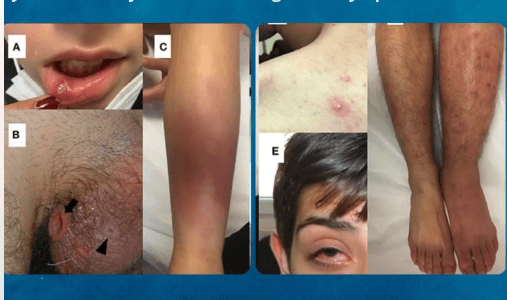
Behçet’s doesn’t rush the stage. It circles quietly, appearing first with a mouth sore that won’t heal, then returning months later with a wave of joint pain or blurred vision. The constellation only starts to make sense in hindsight—when a second or third doctor sees the pattern. By then, many patients have grown accustomed to the patchwork nature of their health story.
Key Facts About Behçet’s Disease
| Aspect | Description |
|---|---|
| Name | Behçet’s Disease (also known as Behçet’s Syndrome) |
| Nature | Chronic inflammatory vasculitis affecting multiple body systems |
| Primary Symptoms | Mouth/genital ulcers, eye inflammation, skin nodules, joint pain |
| Most Affected Regions | Middle East, Mediterranean, East Asia (Silk Road regions) |
| Typical Age of Onset | 20s to 40s |
| Diagnosis Method | Clinical evaluation of recurring symptoms (no definitive lab test) |
| Treatment Approaches | Corticosteroids, immunosuppressants, colchicine, biologics |
| Prognosis | Variable; often manageable with consistent treatment |
| Rare Complications | Vision loss, blood clots, stroke, aneurysm |
| Trusted Source | https://www.nhs.uk/conditions/behcets-disease/ |
For someone living with it, the diagnosis is both a relief and a reckoning. This chronic, multi-system inflammatory disease doesn’t rely on a single organ to wreak havoc. Instead, it causes widespread inflammation of blood vessels—what doctors call vasculitis—which can spark pain, damage, or dysfunction nearly anywhere.
Its most striking hallmark? Painful, recurring ulcers in the mouth and genitals. Often mistaken for aphthous ulcers or even herpes at first glance, these lesions are significantly more aggressive and tend to return with unnerving regularity. In parallel, eye inflammation—particularly uveitis—can begin to compromise vision. If not caught early, it may even lead to permanent blindness.
The skin, too, carries its own markers. Red, acne-like eruptions or deep nodules on the legs signal Behçet’s immune confusion. These visible signs are only part of the story. Under the surface, patients may experience joint pain, gastrointestinal complications, or even vascular inflammation severe enough to form aneurysms or blood clots.
The fact that there is no single test for Behçet’s is both a medical and emotional challenge. Diagnosis hinges on a physician’s ability to connect symptoms that, at face value, might seem unrelated. The disease is rare in Western countries but relatively more prevalent along the ancient Silk Road—stretching from Turkey to Japan. That geographical lens has led to deeper understanding in some regions, but it has also meant longer diagnostic delays in others.
Genetics appear to play a significant role. The HLA-B51 gene is commonly linked to the condition, though it’s not exclusive. It acts more like a red flag than a smoking gun. Environmental triggers, including certain bacterial or viral infections, are also suspected of playing a part, particularly in individuals with a predisposed immune profile.
Treatment strategies are impressively personalized. For some, corticosteroids provide immediate relief from inflammation, though they’re typically used in bursts to avoid long-term side effects. Others rely on colchicine, which is remarkably effective for managing joint symptoms and skin lesions. In cases with eye involvement or vascular complications, immunosuppressants and biologic agents like TNF inhibitors are often prescribed.
By using these therapies in careful balance, doctors can achieve a stable rhythm for many patients. Flares become less frequent. Life, while still textured by medical caution, becomes manageable.
I remember reading about a Behçet’s support group in Izmir where patients exchanged handwritten journals describing their flare cycles, documenting every sore, every hospital visit. There was something profoundly human about the act of tracking a body’s rebellion in ink.
Living with Behçet’s doesn’t mean surrendering to it. The disease has a relapsing-remitting pattern, which means symptom-free periods can last weeks, months, or even longer. Lifestyle adjustments—stress management, dietary tweaks, and fatigue pacing—often help reduce flare frequency.
Medical research, while slow, is moving forward. Over the past decade, biologic therapies have notably improved outcomes for those with severe manifestations. The ability to specifically target inflammatory pathways has been particularly beneficial, reducing hospitalizations and preserving quality of life.
For patients, the journey is layered. Behçet’s is not fatal in most cases, but when it targets the nervous system or major blood vessels, it can become life-threatening. As such, early intervention is critical. Increasingly, digital health tools—such as symptom-tracking apps and telehealth consults—are making it easier to monitor subtle shifts and adjust treatments promptly.
Still, one of the most difficult aspects remains the invisibility of the disease. Unless it leaves scars or clouded eyes, there are few external cues to suggest what someone is managing internally. That invisibility can lead to underestimation—by employers, by strangers, and sometimes even by loved ones.
In the context of chronic illness, Behçet’s stands out for its unpredictability. But it also offers a testament to resilience. Many patients despite years of recurring pain and uncertainty build lives that are exceptionally full. They travel. They parent. They write, teach, and lead.
By integrating a team-based care approach—where rheumatologists, dermatologists, ophthalmologists, and neurologists communicate regularly—outcomes continue to improve. This multidisciplinary effort is highly efficient at catching complications before they escalate.
Behçet’s disease may never be curable, but it is far from unbeatable. With early diagnosis, informed treatment, and strong patient support systems, it’s entirely possible to live well. More than that, it’s possible to thrive, even in the face of something so quietly complex.
Read on Precision and Pores , How Athlone’s Laser and Skin Clinic Became a Quiet Authority on Skincare.
