

At first, the changes can feel so normal that they seem almost explainable, like when you lose your keys or forget a name you know well. Families often brush these off as stress or fatigue instead of something more serious. Those little problems start to happen more often over time.
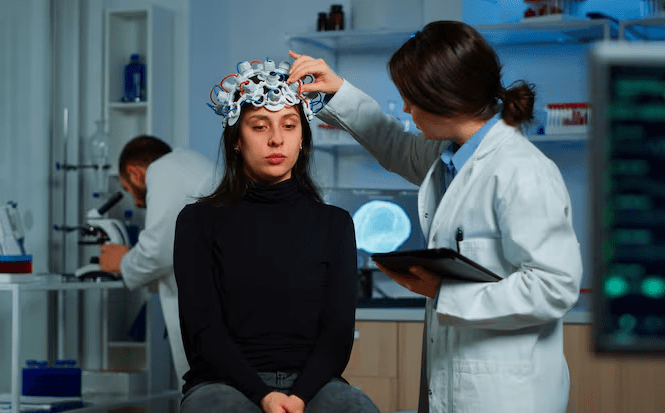
Creutzfeldt-Jakob Disease progresses with a velocity reminiscent of a silent storm intensifying beneath placid waters, imperceptible yet consistently escalating, altering healthy brain tissue in manners that are profoundly challenging to reverse. Prions, which are proteins that act strangely, are what cause it.
Creutzfeldt-Jakob Disease (CJD) Overview
| Category | Details |
|---|---|
| Disease Name | Creutzfeldt-Jakob Disease (CJD) |
| Disease Type | Rare, fatal brain disorder caused by prion proteins |
| Typical Age Group | Usually affects adults aged 50 to 80 |
| Main Cause | Misfolded prion proteins damaging brain tissue |
| Early Symptoms | Memory loss, mood changes, coordination problems |
| Advanced Symptoms | Severe dementia, muscle jerks, blindness, immobility |
| Main Forms | Sporadic, genetic, and acquired |
| Prognosis | Often fatal within one year |
| Diagnosis Methods | MRI scans, spinal fluid testing, EEG |
| Treatment | No cure, supportive care focuses on comfort |
These proteins are very creative in how they destroy things. They make healthy proteins change shape as well, and they spread damage very quickly, like a swarm of bees moving quickly from one place to another and getting bigger as they go.
Scientists have been studying this process very closely for the past ten years. They want to know why these changes happen on their own in most cases, but in some cases they happen because of inherited mutations or rare exposure to contaminated biological material.
Balance isn't as reliable as it used to be, which makes walking feel uncertain, even for people who used to walk with ease.
Families often notice changes in a person's personality before anything else. They might say that their loved ones are quieter, more anxious, or emotionally distant in ways that are hard to explain. These changes in behavior can be very upsetting because they change relationships that used to feel stable.
As the disease gets worse, neurological damage becomes more obvious, causing involuntary muscle jerks and a much faster decline in cognitive function, which makes everyone feel very uneasy about losing their independence.
Doctors use diagnostic tools like MRI scans and spinal fluid analysis to show brain changes in a very clear way. This helps families understand what's going on, even when it feels like too much to handle.
Even with these improvements, there are still few treatment options. Care focuses on comfort, using medicine to ease pain and reduce muscle spasms. This makes things better for keeping dignity and calm in later stages.
Families often take on the role of caregivers, changing their daily routines in ways that are both tiring and important. They learn to connect with each other in new ways by using touch, tone, and presence instead of words.
One woman said that she played her husband's favorite music every night, hoping that the familiarity would still reach him even though the disease was getting worse..
Eventually, patients can't move at all, and they have to rely on others for care. This shows how fragile neurological stability can be when it is disrupted.
About seventy percent of patients die within a year, which is a very short time frame compared to most neurological illnesses. This means that families have to adjust emotionally very quickly.
Scientists have learned a lot more about how prions behave by using advanced neuroscience methods. They have found pathways that could one day lead to very effective treatments that can slow down or stop the progression of disease.
Because medical history shows that understanding often comes before treatment, it opens up new possibilities for breakthroughs that once seemed impossible.
Giving comfort becomes a way to be strong, strengthening the emotional ties that stay strong even when brain function starts to fail.
Doctors often talk about how important it is to be present, stressing that emotional connection is still important even when communication is limited. This shows how much people need to be close to each other.
Care environments are very important for keeping people comfortable. They provide calm spaces and familiar voices, which lowers anxiety and helps patients stay as calm as possible.
Awareness has also grown a lot in the last few years, which has helped families spot symptoms sooner, get evaluations faster, and get ready for the road ahead with more clarity.
Preparation helps families focus on quality of life, which means making sure that patients get care that respects their dignity and emotional needs.
Research labs are still working on figuring out how protein misfolding starts, looking at genetic patterns, and trying out new treatments that could completely change the course of prion diseases.
Each new discovery makes things much clearer than they were in the past, showing that even the hardest medical problems can be solved with hard work. For now, compassion is still the most important part of care.
And that compassion, which is shown through being there, being patient, and making connections, still gives meaning to situations that often seem very hard.
Even when neurological decline can't be stopped, people can still care for each other, which is a source of strength when medicine hasn't found a solution yet.
Learn The Surgery That Gives Feeling Back , Inside the Quiet Fix for Cubital Tunnel Syndrome.
